The Blind Spot in the C-Suite: Why Real-Time Operational Intelligence Must Replace Lagging Metrics
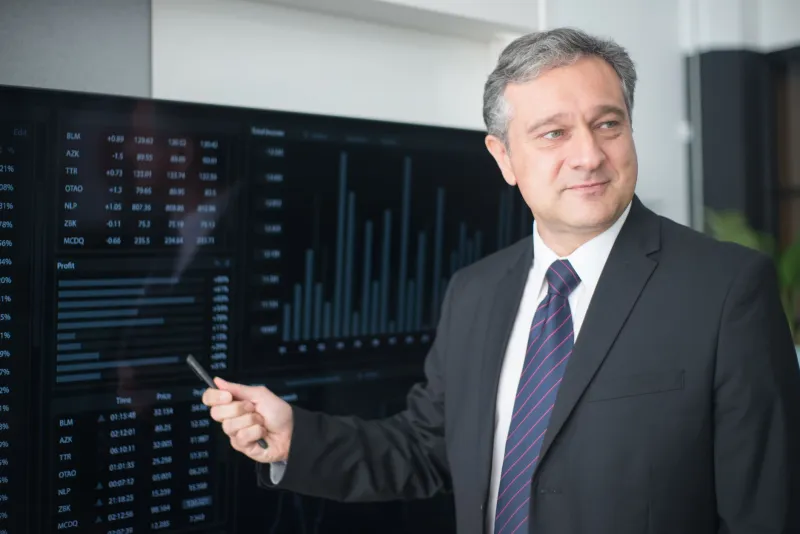
There is a quiet paradox at the heart of modern enterprise leadership. The executives responsible for steering billion-dollar organizations through rapidly shifting markets are, in many cases, working from financial data that is weeks or months old. The quarterly earnings report, the monthly P&L summary, the annual budget review — these are the instruments through which much of corporate America still measures its own performance. And while these documents are indispensable for investor relations and regulatory compliance, they are deeply inadequate as tools for active management.
This is not a new observation. But it is one that the accelerating pace of business conditions makes increasingly urgent. In an environment where a supply chain disruption can materialize and cascade within 72 hours, where a competitor can launch a new product offering before your next board meeting, and where customer sentiment can shift in real time across digital channels, the quarterly report is not a compass. It is a rearview mirror.
What Lagging Metrics Actually Tell You
To be clear, financial reporting serves a legitimate and important purpose. It provides a structured, auditable record of organizational performance that satisfies the demands of shareholders, regulators, and lenders. It enables trend analysis over time and supports strategic planning at the highest levels of the organization.
What it does not do is tell a CEO, COO, or division president what is happening inside their organization right now. By the time a metric appears in a quarterly report, the operational conditions that produced it have long since evolved. If a business unit's margins began compressing in the second month of the quarter, leadership will not learn about it until six to eight weeks after the quarter closes — by which point the window for early intervention has passed entirely.
This lag creates a management environment in which executives are perpetually reacting to history rather than responding to the present. Decisions get made based on the last available data point rather than the current state of the enterprise. And in a business environment defined by speed, that gap is not merely inconvenient — it is a genuine strategic liability.
The Case for Operational Intelligence
Operational intelligence, as a discipline, represents a fundamental shift in how enterprise leaders access and act on performance data. Rather than waiting for aggregated financial summaries, operational intelligence frameworks deliver continuous, granular visibility into the metrics that actually drive business outcomes — throughput, cycle time, customer acquisition velocity, workforce utilization, supplier reliability, and dozens of other indicators that financial statements either obscure or omit entirely.
The distinction matters because financial outcomes are downstream effects of operational realities. Revenue declines because customer satisfaction eroded. Margins compress because procurement costs rose or process inefficiency increased. Headcount costs spike because turnover in a key division went unaddressed. Each of these root causes has an operational signature that is detectable in real time — long before it registers as a financial result.
Leaders who have access to operational intelligence can see these signals early. They can intervene before a trend becomes a crisis. They can allocate resources proactively rather than reactively. And they can hold their organizations accountable to performance standards on a continuous basis rather than in quarterly post-mortems.
Building a Culture of Measurable Accountability
Technology alone does not solve this problem. Many organizations have invested heavily in business intelligence platforms, enterprise dashboards, and data visualization tools — only to find that the underlying culture of the organization continues to operate on a quarterly cadence. Data that is available in real time but reviewed only monthly produces outcomes no better than traditional reporting.
The more fundamental transformation required is cultural. Enterprise leadership must establish a norm in which operational performance is a continuous conversation rather than a periodic event. This means redefining the rhythms of organizational review — moving from monthly or quarterly business reviews toward weekly or even daily operational stand-downs for critical functions. It means training managers at every level to interpret operational data and make data-informed decisions within their domains of authority. And it means creating accountability structures that tie individual and team performance to operational metrics, not just financial results.
This shift can be uncomfortable, particularly in organizations with deeply entrenched reporting traditions. Executives who have built their careers on managing to quarterly targets may resist a framework that demands more frequent transparency. But organizations that successfully navigate this cultural transition consistently report improvements not just in operational efficiency, but in leadership confidence, employee engagement, and strategic agility.
The Technology and Consulting Infrastructure That Enables the Shift
For enterprises ready to move beyond lagging metrics, the path forward typically involves two parallel workstreams: technology enablement and organizational consulting.
On the technology side, the priority is integration. Most large enterprises already possess the raw data needed to support operational intelligence — it exists across their ERP systems, CRM platforms, supply chain tools, and workforce management applications. The gap is not data availability but data connectivity. Building a unified operational data layer that aggregates and normalizes information from across the enterprise is the foundational technical challenge. Cloud-based data platforms and modern API architecture have made this increasingly achievable, even for organizations with complex legacy infrastructure.
On the consulting side, the work is equally important and often underestimated. Defining the right operational metrics — those that are genuinely predictive of business outcomes rather than merely easy to measure — requires deep knowledge of both the industry and the specific organization. Designing the governance structures that sustain a culture of operational accountability requires change management expertise. And translating data insights into leadership behaviors requires coaching and facilitation that goes well beyond a technology implementation.
A Different Kind of Leadership Mandate
The executives who will define enterprise success over the next decade are those who insist on seeing their organizations clearly — not as they were last quarter, but as they are today. That insistence is not simply a preference for better data. It is a leadership philosophy that prioritizes truth over comfort, responsiveness over tradition, and accountability over ambiguity.
At CIA88 Group, we believe that operational intelligence is not a luxury reserved for the most technologically sophisticated enterprises. It is an achievable standard for any organization willing to invest in the right infrastructure and the right cultural foundations. The tools exist. The methodologies are proven. What remains is the leadership will to demand better visibility — and the organizational commitment to act on what that visibility reveals.