Seven Knowledge Time Bombs Ticking Inside Your Organization
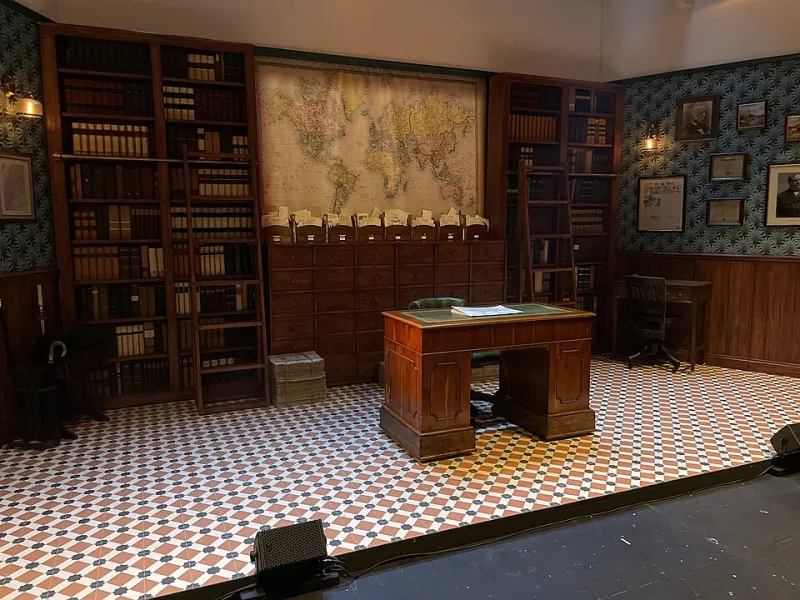
Photo: Alex Chan, CC BY 2.0, via Wikimedia Commons
Every seasoned executive can tell the story: the engineer who resigned on a Tuesday and took, invisibly, the only working knowledge of a legacy billing system. The analyst whose two-week notice triggered a small panic in the finance department because the quarterly board deck lived entirely in her head. These are not staffing failures. They are structural failures — single points of failure built one skipped documentation session at a time.
The pattern is predictable enough to audit for. Below are the seven knowledge concentrations that most reliably detonate inside American enterprises, how to spot each one before the letter arrives, and what to do about it.
1. The Legacy System Oracle
Who: The one person — often tenured, often near retirement eligibility — who understands the custom-built platform no vendor supports anymore. Payroll systems, homegrown ERPs, that claims processor written in 2003.
Warning signs: Production incidents route to one person by default. Documentation is either nonexistent or outdated. The phrase "we should probably ask Dave about that" appears in meeting minutes.
Countermeasure: Pay the oracle to document, not just maintain. Structured capture — recorded walkthroughs, annotated code comments, runbooks written as a project with a deadline — beats hoping. Pair a second engineer with them on every ticket until knowledge is genuinely shared, not merely witnessed.
2. The Board Reporting Owner
Who: The lone analyst who assembles the quarterly board deck, the investor metrics, or the lender compliance package. Nobody else knows the data sources, the manual adjustments, or the definitions behind the numbers.
Warning signs: The reporting cycle stalls when they take vacation. Reconciliation lives in a personal spreadsheet. Requests for the underlying logic produce a shrug.
Countermeasure: Rotate the process quarterly. Whoever runs it once can run it again, and the second person to run it will document what the first never thought to. Automate the repeatable pieces; a process that requires one specific human is, by definition, not yet a process.
3. The Vendor Relationship Sole Holder
Who: The manager who owns a critical supplier relationship entirely — the pricing history, the side agreements, the escalation contacts, the reason the contract reads the way it does.
Warning signs: Vendor meetings happen one-on-one. Negotiation history is undocumented. The vendor's account team knows exactly one name at your company.
Countermeasure: Require two named relationship owners on every strategic vendor. Record decision rationale in the contract file at the time of signing. Vendors respect continuity; institutional memory is negotiating leverage.
4. The Institutional Historian
Who: The long-tenured operator who knows why the Denver facility was configured that way, which customer contract has the unusual terms, and which initiative failed in 2016 and why.
Warning signs: New managers describe onboarding as "six months of asking Carol." Strategic decisions get re-litigated because nobody remembers the original analysis.
Countermeasure: Conduct structured exit interviews before people exit — treat them as knowledge harvests, not grievance sessions. A decision log, maintained in real time, converts one person's memory into an organizational asset.
5. The Compliance and Licensing Keyholder
Who: The individual who holds the regulatory filings, the professional certifications, the banking authorizations, or the government portal credentials in their name alone.
Warning signs: Renewal notices go to a personal inbox. Regulatory correspondence is addressed to one employee. Continuity planning has never mentioned this function.
Countermeasure: This is the least forgivable gap because it is the most preventable. Delegate authority formally, file successors with regulators and banks proactively, and centralize credential management with role-based access — not personal ownership.
6. The Unwritten Process Expert
Who: The supervisor whose team runs flawlessly because of judgment, sequencing, and exception-handling that exists nowhere in the standard operating procedures.
Warning signs: Performance dips measurably when they are out. Their SOPs are technically current and practically useless. Other sites keep asking to "visit and see how they do it."
Countermeasure: Shadow-and-document programs, where a peer observes and writes the actual process — including the exceptions. Then test it: run the operation for a week without the expert present, deliberately, while the stakes are low.
7. The Cross-System Translator
Who: The quiet specialist who understands how three departments' systems and data connect — how sales records become invoices become revenue recognition. No single department owns them; every department depends on them.
Warning signs: They appear in the middle of every cross-functional escalation. Data discrepancies between departments get resolved by one person, verbally.
Countermeasure: Map the handoffs explicitly. Data dictionaries, integration documentation, and cross-departmental process maps turn tribal knowledge into reference material. Fund a second translator, even part-time; this role is too central to hold with a headcount of one.
The Audit That Prevents the 2 AM Call
Run a simple exercise this quarter: list every process, system, and relationship in your enterprise that would break within thirty days if one specific person disappeared. For each, ask two questions — how likely is departure, and how expensive is the gap?
Anything scoring high on both is a knowledge time bomb. Defuse the top three before the market, a competitor, or a Tuesday-night resignation email does it for you. Succession planning that only covers executives is not succession planning; the most fragile dependencies in your organization are usually two levels below the org chart anyone reviews.